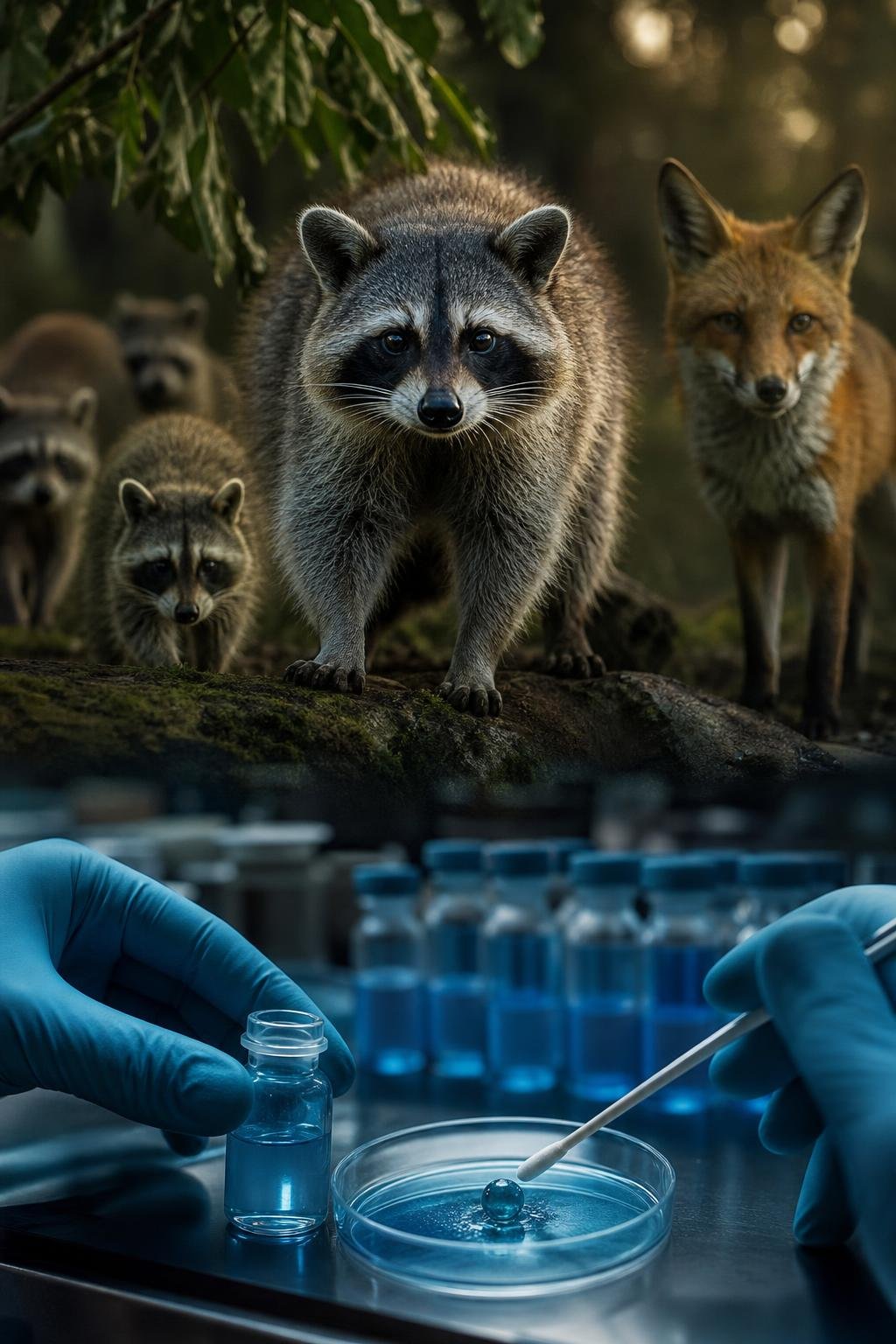
A vaccine that spreads from animal to animal sounds like science fiction—but researchers are seriously exploring it as a way to slow diseases that are difficult or impossible to control through conventional vaccination. These experimental “self-spreading vaccines” would be designed for wildlife reservoirs, not people. The goal is to immunize a small number of animals and allow protection to move through a population on its own.
How transmissible vaccines are designed
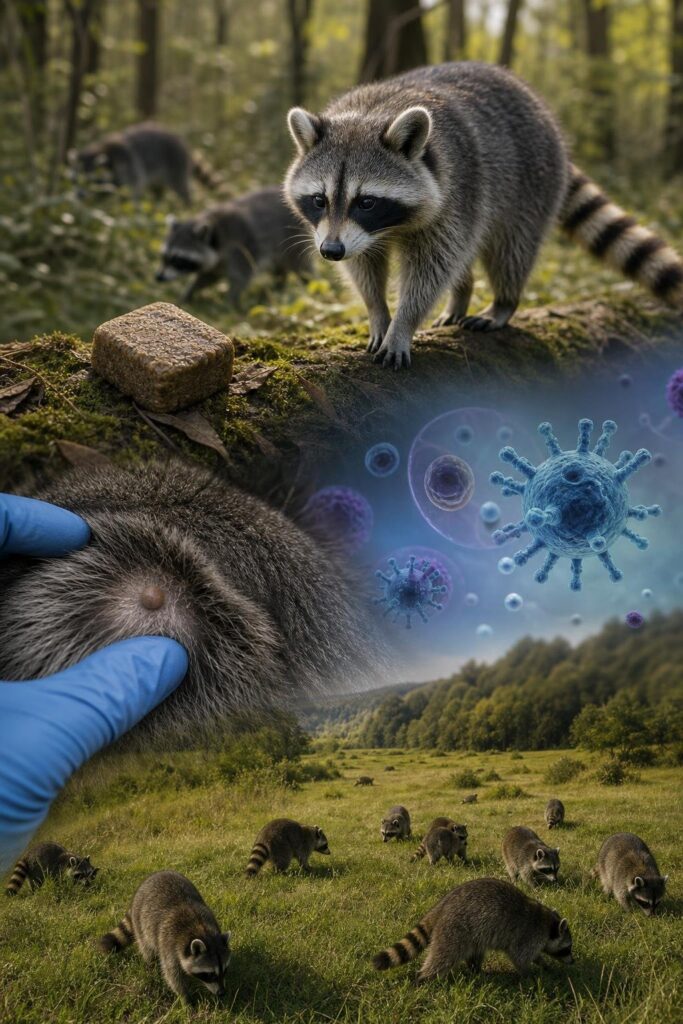
The basic concept combines a harmless virus with a carefully selected piece of a dangerous pathogen. Scientists engineer a species-specific virus—often a cytomegalovirus, also called a betaherpesvirus—to carry that piece. The altered virus would infect animals of the target species and stimulate an immune response against the disease-causing pathogen.
A conventional wildlife vaccination campaign may require people to capture animals, inject them individually, or distribute vaccine-laced food. Those approaches can be expensive, logistically difficult, or ineffective when animals are spread across large or inaccessible areas. A transmissible vaccine is intended to overcome some of those barriers by moving through natural contact within a population.
The concept is experimental, however. “Transmissible” and “self-disseminating” do not mean that a vaccine has been approved for general use. For the diseases discussed by researchers, no transmissible vaccine has been released.
Wildlife targets, not human vaccination
The main proposed use is to protect wildlife that acts as a reservoir for infections affecting animals or people. Researchers are studying whether a vaccine could be tailored so closely to one species that it would not readily infect others.
One research focus is rabies in vampire bats. Daniel Streicker’s lab at the University of Glasgow has studied the possibility of using a transmissible vaccine to spread protection through bat populations. Vampire bats can be difficult to reach individually, making them a useful example of the practical challenge these vaccines are meant to address.
Another target is Lassa virus in the multimammate rat, Mastomys natalensis. Researchers have cloned three rodent cytomegaloviruses and identified an insertion site where vaccine material could potentially be placed. Mathematical modeling suggests that such an approach could produce large reductions in disease prevalence under suitable conditions. This work remains preclinical, combining laboratory research with modeling rather than field release.
Scott Nuismer of the University of Idaho has conducted much of the modeling related to how transmissible vaccines might move through wildlife populations.
What the research can—and cannot—show
Models can help scientists explore questions that are difficult to answer in the real world. They can estimate how vaccination might affect disease prevalence, how many animals may need initial exposure, and how transmission could behave under different conditions.
But modeling is not the same as demonstrating that a vaccine will work safely in nature. Real populations change over time and may behave differently from assumptions built into a model. A vaccine virus might spread less efficiently than expected, or it could move in ways researchers did not anticipate. Laboratory findings also cannot fully settle what would happen across a complex ecosystem.
A historic field trial shows that the broader idea has been tested outside the laboratory. In 2000, a transmissible vaccine against myxomatosis and rabbit hemorrhagic disease was tested in wild rabbits on Isla del Aire, a Spanish island. That example is important context, but it does not mean that transmissible vaccines for rabies or Lassa virus are ready for release. Those projects remain under development.
Why scientists are divided
The potential benefit is substantial: a transmissible vaccine might reach animals that people cannot easily capture and could reduce infections across a reservoir population. Lowering disease in wildlife could also reduce the risk of transmission to other animals or people, depending on the disease and ecological setting.
The risks are equally serious. Once a self-disseminating vaccine is released, it may be difficult or impossible to recall. Scientists must consider whether the engineered virus could mutate, revert toward a more harmful form, or spread to a non-target species. Even a design that appears stable in testing would need extensive evaluation before any environmental use.
There are also regulatory and consent questions. Wildlife does not belong to a single owner or community in the way a clinical trial population might. Decisions about releasing a transmissible organism could affect ecosystems and neighboring regions, raising questions about who has authority to approve the work and who bears responsibility for unexpected consequences.
Biosecurity and dual-use concerns add another layer. The same biological tools that make a vaccine effective could raise concerns about misuse. A 2024 Science review by Streicker, Griffiths, Antia, Bergner, Bowman, and Nuismer discussed both the promise and the challenges of developing transmissible vaccines for animal infections.
Proposed safeguards before any release
Researchers have proposed several ways to reduce risk. One is to use vectors that are highly specific to the intended species, limiting the chance of infection in other animals. Another is to prioritize genetically stable designs so that the vaccine is less likely to change in dangerous ways.
Scientists have also considered self-limiting, or attenuating, transmission. Instead of spreading indefinitely, a vaccine might be designed to fade out after reaching a limited portion of the population. Staged risk assessment is another proposed safeguard: progress would occur through increasingly realistic tests, with each stage evaluated before moving forward.
These measures could reduce hazards, but they would not eliminate uncertainty. The central debate is whether the potential public and animal-health benefits justify releasing a biological system that cannot be completely controlled afterward.
Takeaway
Self-spreading vaccines could offer a new way to reduce diseases carried by hard-to-reach wildlife, including rabies in vampire bats and Lassa virus in multimammate rats. Yet the technology is still experimental, and no transmissible vaccine for those diseases has been released. Scientists remain divided because the possible benefits must be weighed against ecological, regulatory, biosecurity, and control risks.
Sources
– Streicker Lab: Research
– PLOS Computational Biology: Lassa virus vectors
– PLOS Neglected Tropical Diseases: Transmissible vaccine research


