
The Mediterranean diet may be associated with a lower risk of several cancers, according to a new meta-analysis—but the findings are not proof that food alone prevents cancer. Instead, they add to a broader body of evidence suggesting that a plant-forward eating pattern can be a practical part of a health-conscious lifestyle.
What the Meta-Analysis Found
A systematic review and meta-analysis published in GeroScience on September 15, 2026, examined 34 observational studies involving 4,286,835 participants. The researchers included both prospective cohort studies and case-control studies, using research available through September 2025.
The analysis compared people with the highest adherence to a Mediterranean-style diet with those reporting the lowest adherence. Higher adherence was associated with lower risks of three cancers:
– Head and neck cancer: Relative risk (RR) of 0.55, corresponding to an association with about 45% lower risk
– Gastric cancer: RR 0.62, or about 38% lower risk
– Liver cancer: RR 0.59, or about 41% lower risk
These results concern associations, not guaranteed outcomes. A relative risk below 1 means the higher-adherence group experienced fewer cases in the analyzed data, but it does not show that the diet directly caused the difference.
Earlier evidence has also linked the Mediterranean pattern with lower colorectal cancer risk. Beyond cancer research, the diet has well-established cardiometabolic benefits, making it a widely studied approach to overall healthy eating.
Why the Findings Need Cautious Interpretation
The new analysis is substantial, but its design has important limitations. Because the included studies were observational, researchers observed what people reported eating and how health outcomes differed. They did not assign participants to follow a diet under controlled conditions. As a result, other factors may help explain the association.
Diet was self-reported, which can make eating patterns difficult to measure precisely. People who follow a Mediterranean-style diet may also differ in other ways, such as their overall lifestyle or use of preventive health care. Those differences can complicate efforts to separate the effects of diet from the effects of other behaviors.
The studies also produced varying results. Heterogeneity was high for head and neck cancer, with an I² value of 90%, and for gastric cancer, at 76%. Heterogeneity was moderate for liver cancer, at 35%. In plain language, the studies did not all show effects of the same size or consistency. The results are meaningful, but they should be viewed as evidence of a pattern rather than a precise promise about an individual’s future risk.
What the Mediterranean Diet Actually Includes
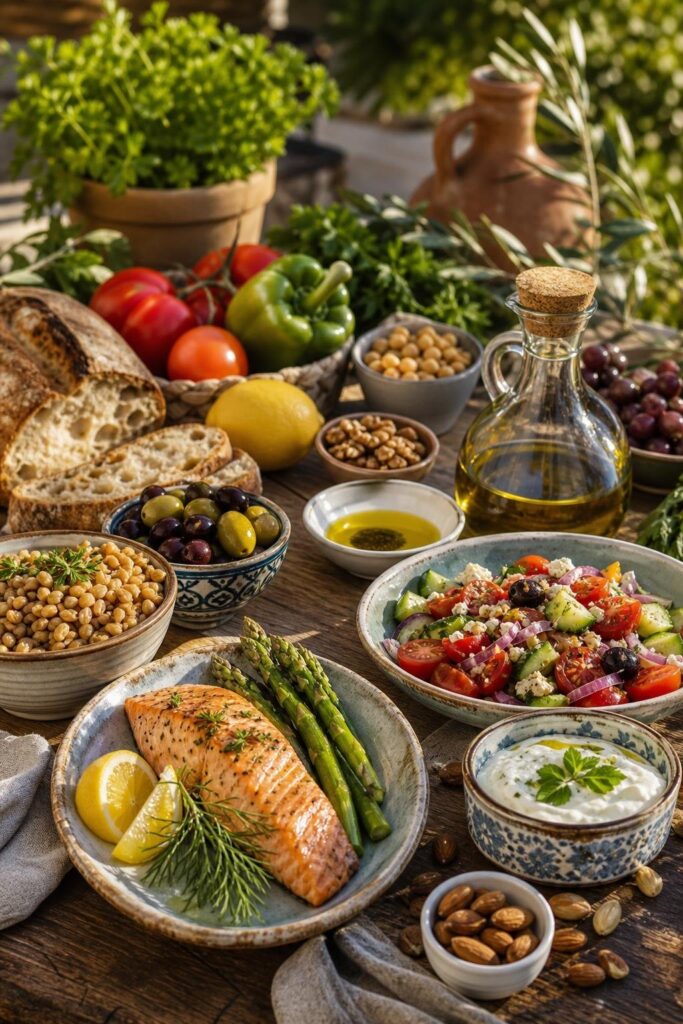
The Mediterranean diet is less a strict menu than a flexible eating pattern. It emphasizes plenty of vegetables, fruit, legumes, whole grains, nuts, and extra-virgin olive oil as the main fat.
Fish and seafood are included a couple of times a week. Poultry and dairy foods such as yogurt and cheese are eaten in moderate amounts. Red meat, processed meat, and sweets play a smaller role. Herbs and spices provide flavor, helping meals rely less on heavy sauces or excess salt.
This approach is not about reproducing every meal from a particular country. It is about changing the overall balance of foods. A plate built around vegetables, beans, whole grains, and healthy fats can fit many cuisines, budgets, and cooking styles.
Simple Ways to Start Eating This Way
Small substitutions can make the pattern easier to follow without requiring a complete kitchen overhaul.
– Use olive oil instead of butter for cooking or drizzling over vegetables and grains.
– Add beans to familiar meals, such as soups, salads, grain bowls, or pasta dishes.
– Keep nuts available for snacks, choosing a handful rather than highly processed snack foods.
– Include fish twice a week, using preparations and varieties that suit your preferences.
– Fill half the plate with vegetables at lunch and dinner.
– Choose whole grains more often, such as brown rice or other minimally refined grain options.
– Use herbs and spices to make beans, vegetables, fish, and whole grains more appealing.
The goal is consistency, not perfection. A Mediterranean-style pattern can include favorite foods while gradually shifting more meals toward plants, legumes, whole grains, and unsaturated fats.
A Healthy Pattern, Not a Cancer Cure
The meta-analysis does not show that the Mediterranean diet cures cancer or eliminates cancer risk. Cancer develops through complex, varied causes, and no single eating pattern can replace screening, medical care, or attention to personal risk factors.
Still, the findings offer another reason to consider this style of eating. It is flexible, nutrient-dense, and compatible with everyday meals. Focusing on vegetables, fruit, beans, whole grains, nuts, olive oil, and fish can be a realistic way to support overall health while potentially aligning with the lower cancer risks observed in research.
Takeaway
Research through September 2025 found that greater adherence to the Mediterranean diet was associated with lower risks of head and neck, gastric, and liver cancers. Because the evidence was observational and varied across studies, it cannot prove cause and effect. The most practical response is not to treat the diet as a guarantee, but to use its simple principles—more plants and legumes, olive oil instead of butter, fish regularly, and fewer processed foods—as part of a balanced approach to health.
Sources
– GeroScience systematic review and meta-analysis


