Some 1,700 years ago, a family in Egypt’s Western Desert carved a poem for a man they had lost. Archaeologists have now found it. The Dakhla Oasis tomb elegy, a 19-line poem on a stone slab, mourns a man named Pisechtes, or Psychtis, who may have been a judge.
The discovery was reported by Smithsonian Magazine on 14 October.
The tomb
Egypt’s Supreme Council of Antiquities found the mud-brick tomb in the Bir al-Shaghala necropolis, a burial ground for elite residents of Mothis, the ancient capital of the oasis. A married couple was buried there.
- A hall with a partly collapsed vaulted ceiling.
- Two mud-brick burial chambers topped by a pyramid-shaped upper section.
- A sandstone offering table, a purification basin and pottery.
- A bronze coin showing the Roman emperor Constantine.
The poem
The stela with the poem was set into the tomb’s southern wall. It dates to the late third or early fourth century CE.
“A highly literary and original epigram”
Historian Angelos Chaniotis, who was not involved in the dig, called it “a highly literary and original epigram”. He noted that the inscription uses diacritical marks such as accents, a sign of the author’s high level of education.
Why it matters
Oases like Dakhla can seem remote on a map. Finds like this show they had a rich literary and cultural life in the Roman era, with families able to commission refined poetry to remember the people they loved.
More in our Science section.
Source: Smithsonian Magazine, 14 October 2026.
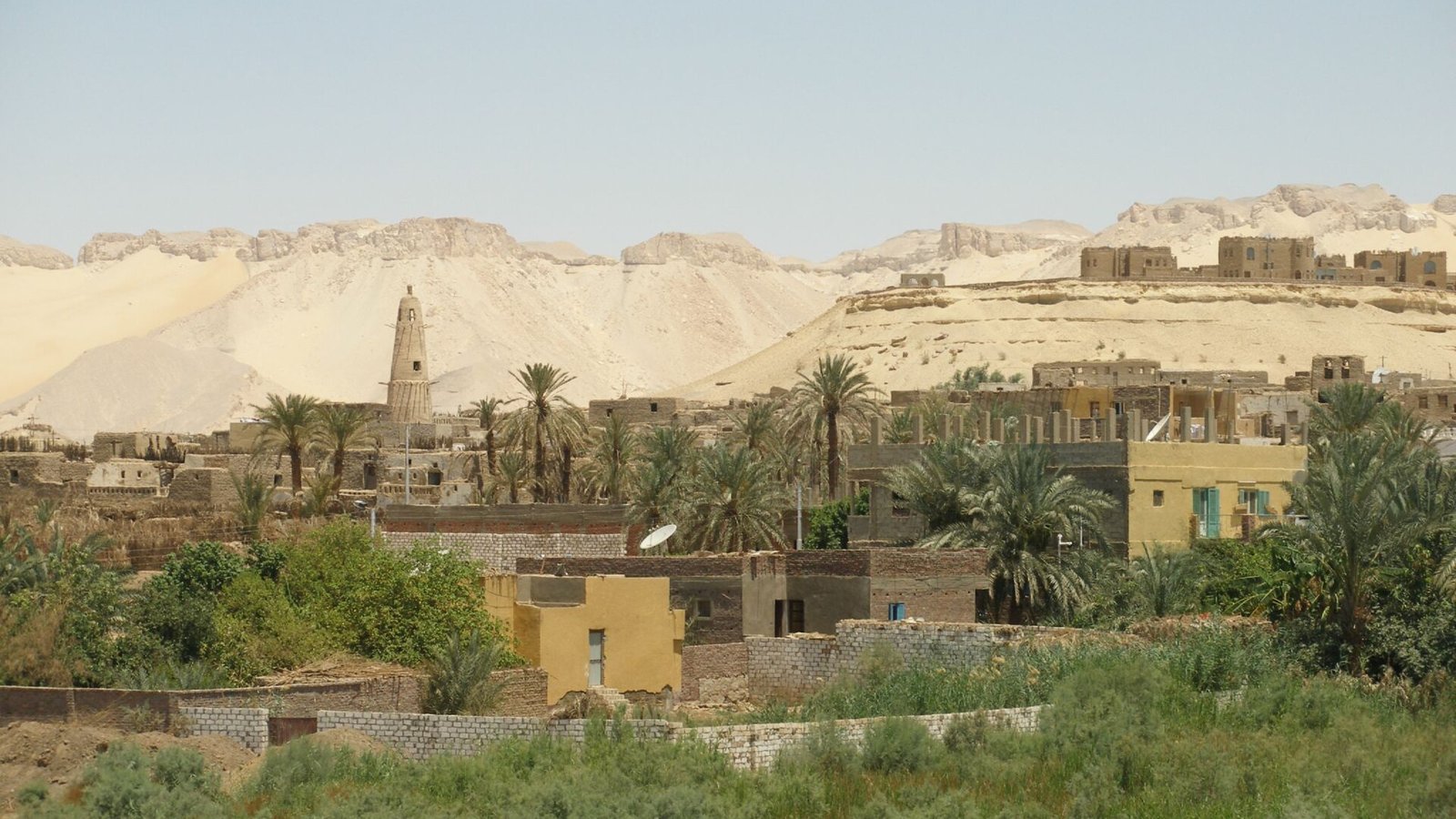
Featured image: Dakhla Oasis view (May 2007) by Vyacheslav Argenberg, CC BY 2.0, via Wikimedia Commons.

