Headlines this week asked whether artificial intelligence had cracked one of mathematics’ hardest problems. The short answer: not yet. But AI and the Riemann hypothesis are now in the same sentence for a real reason, as Science and Scientific American reported.
What is the Riemann hypothesis?
Proposed by Bernhard Riemann in 1859, it is a statement about where the “zeros” of the Riemann zeta function can lie. Those zeros are closely tied to how prime numbers are distributed. It has resisted proof for more than 160 years and is one of the Clay Millennium Prize Problems.
What OpenAI claims
In its release “Sharing AI progress in mathematics”, OpenAI claims a proof of a “quasi-Riemann hypothesis”. In plain terms, it says there are no zeros of the zeta function, and of certain related functions, in the region where the real part is greater than 7/8.
It also claims a separate result that rules out so-called Siegel zeros.
Progress, not a solution
The full Riemann hypothesis concerns the line where the real part equals 1/2. Pushing the zero-free region to 7/8 would be a big step, but it is not the full proof. A follow-up paper on arXiv by mathematician Baiying Liu has already improved the bound, and that result was formalized in the Lean proof assistant.
Why mathematicians are paying attention
Formal checking in Lean is important: it lets a computer verify each logical step. If the claims hold up under expert review, they would show AI contributing to frontier mathematics, not just solving textbook problems.
More in our Tech section.
Sources: Science; Scientific American; OpenAI.
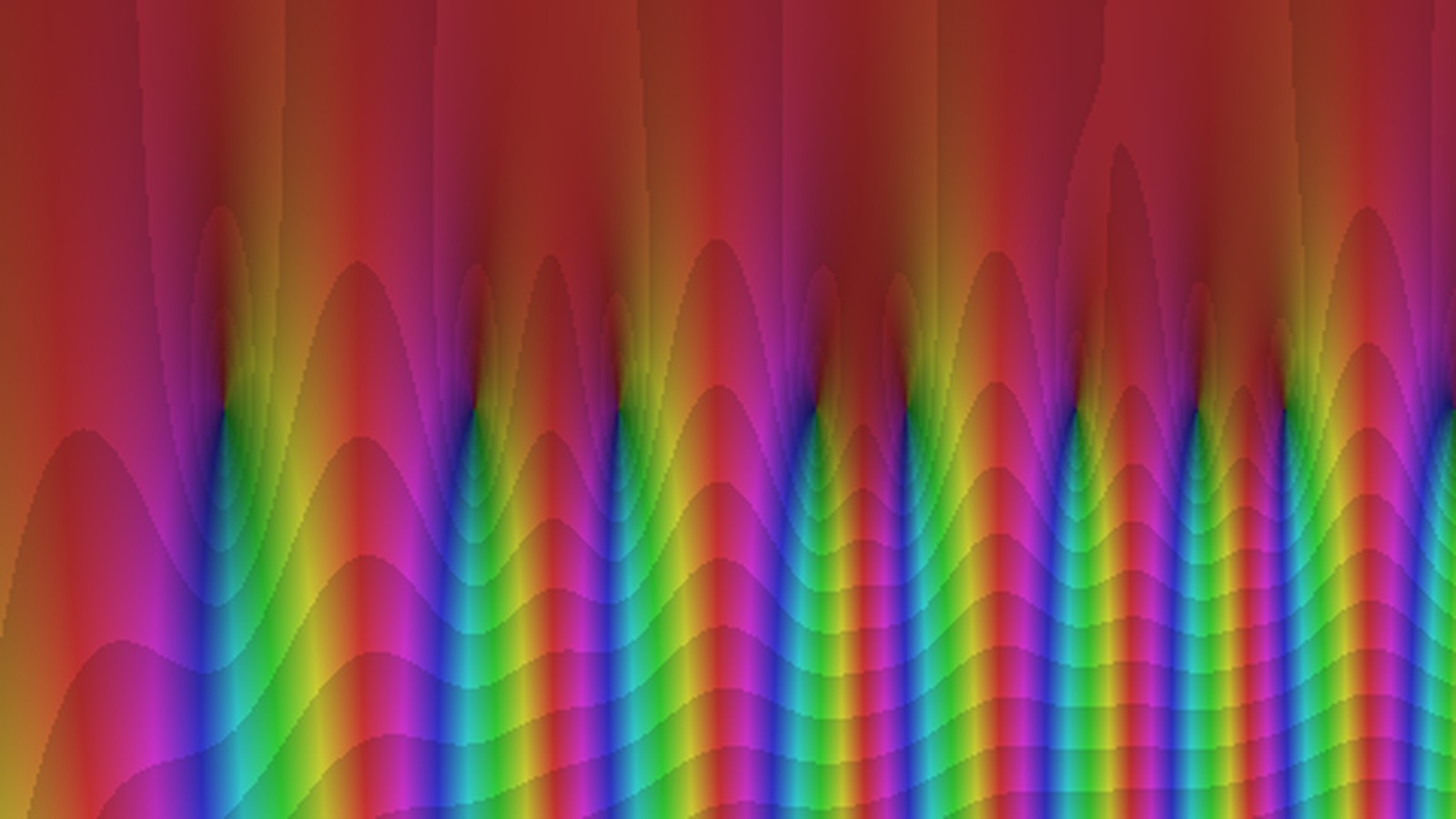
Featured image: domain-coloring plot of the Riemann zeta function, rendered by The Hub Feed with mpmath; free to reuse.


