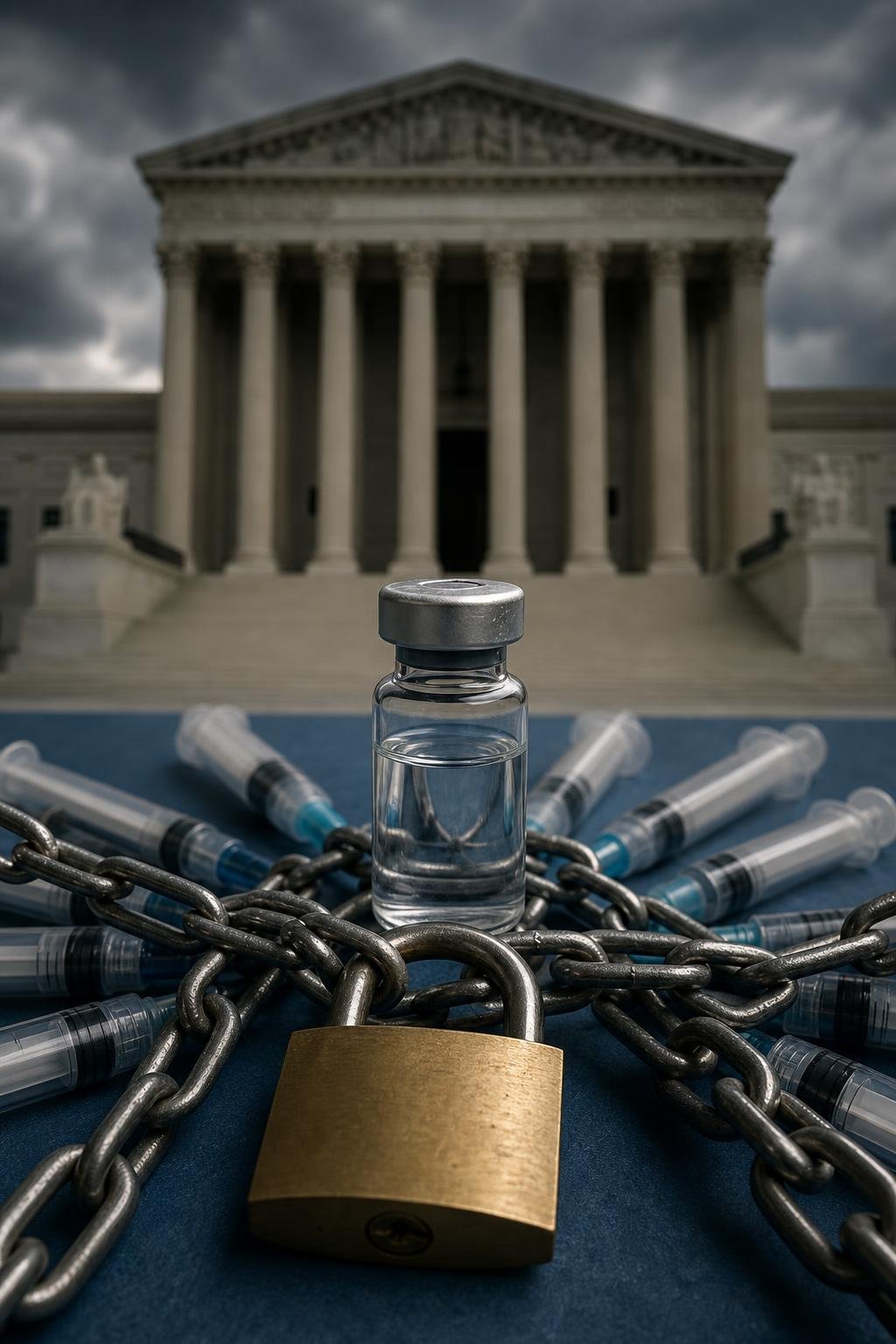
A fight over who gets to shape the childhood vaccine schedule has left federal policy in an unusual holding pattern. The dispute is not about a single vaccine or one court ruling. It concerns the authority of the Centers for Disease Control and Prevention (CDC), the role of its expert advisers, and whether major national recommendations were changed through a lawful process.
What changed in 2025 and 2026

In 2025, Health and Human Services Secretary Robert F. Kennedy Jr. fired all 17 members of the Advisory Committee on Immunization Practices, known as ACIP. He then appointed new members to the committee.
ACIP has long played a central role in US vaccine policy. For about 60 years, its votes helped guide CDC advice and influenced insurance coverage, including the federal Vaccines for Children program.
In January 2026, Kennedy issued changes to the routine US childhood vaccine schedule. CIDRAP reported that the number of vaccines covered by the routine schedule fell from 17 to 11. The changes also reduced the recommended number of HPV vaccine doses to one.
Supporters said the revisions would mean fewer shots and bring more scrutiny to vaccine recommendations. Critics argued that the administration had bypassed established scientific and administrative procedures. Standard childhood vaccines, however, are supported by extensive safety evidence; the court fight centers on the decision-making process and the resulting guidance.
Why the AAP sued
The American Academy of Pediatrics and other medical organizations challenged the changes in federal court. The case, American Academy of Pediatrics v. Kennedy, was filed in the US District Court for the District of Massachusetts in July 2025 and amended in January 2026.
The groups argued that the government had acted unlawfully by removing the existing ACIP members, installing new appointees, and relying on the reconstituted committee’s actions to support major policy changes.
The AAP did not adopt the narrower vaccine schedule issued in January. That distinction matters because physicians and families may encounter recommendations from professional medical groups that differ from the federal guidance that was briefly put in place.
What the March court ruling did
On March 16, 2026, US District Judge Brian E. Murphy granted a preliminary injunction in part. The order stayed the January 2026 memo, the appointments of the new ACIP members, and their votes.
A preliminary injunction is not a final decision on the entire case. It is a temporary court action intended to preserve the situation while litigation continues. Judge Murphy found that the challengers were likely to succeed in showing that the changes violated the Administrative Procedure Act, the federal law governing many agency actions.
The judge also wrote that 13 of the appointees “appear distinctly unqualified.” Following the ruling, the CDC canceled ACIP meetings.
As a result, federal guidance reverted to the recommendations that were in place before the January changes. ACIP activity remains suspended, and the broader lawsuit continues. The case could eventually reach the Supreme Court, although that outcome is not certain.
Why US vaccine guidance is now frozen
The legal dispute interrupted the usual path for developing and maintaining federal vaccine recommendations. ACIP votes traditionally provided a formal foundation for CDC advice and helped determine which vaccines were covered through public programs and insurance systems.
With the new appointments and their votes stayed, that process cannot simply proceed as it did before. The AP reported on September 26, 2026, that CDC vaccine policy recommendations had effectively ground to a halt.
Doctors’ groups have responded by issuing their own recommendations. Those groups are working with a researcher at the University of Minnesota, while the university’s Vaccine Integrity Project, part of CIDRAP and directed by Michael Osterholm, began independent reviews of evidence involving meningococcal and pneumococcal vaccines in September 2026.
This does not mean that families have no medical guidance or that routine vaccination has become scientifically unsettled. It means that federal policy-making and the legal authority behind it are in limbo while the court case proceeds.
What parents should know
Parents may see different schedules depending on which organization or clinician they consult. Reporting on the dispute advises parents to ask their child’s clinician which schedule the practice follows.
The AAP never adopted the narrower schedule announced by Kennedy. Families should therefore avoid assuming that a change in a federal memo automatically represents a consensus among pediatricians or medical organizations.
The court proceedings also do not establish that routine childhood vaccines are unsafe. The central questions are whether the administration followed the law, whether the new ACIP members were properly appointed, and whether their votes could support the revised federal recommendations.
Because the litigation remains active, the schedule and the process for producing federal guidance could change again. A child’s clinician can explain which recommendations the practice is using and how they apply to that child.
Takeaway
The current “freeze” stems from a court challenge to the removal and replacement of ACIP members and to the January 2026 changes to the federal childhood vaccine schedule. Judge Murphy’s preliminary injunction put those changes on hold, restored earlier federal guidance, and suspended ACIP activity. Until the lawsuit is resolved, parents should ask their child’s clinician which schedule guides care and distinguish federal policy from recommendations issued by professional medical groups.
Sources
– AP via WSVN: CDC vaccine policy recommendations grind to a halt
– CIDRAP: Vaccine lawsuit against Kennedy could reach Supreme Court
– Medical Daily: Independent review of meningococcal and pneumococcal vaccines
– Civil Rights Litigation Clearinghouse: AAP v. Kennedy


