Quick answer: On 15 October 2026, CERN and French AI company Mistral signed a statement of intent to build Flare, a “Large Physics Model” that CERN calls the first foundation model for collider physics. Instead of learning from text like a chatbot, it will be trained on billions of simulated proton-proton collisions from the Large Hadron Collider (LHC), and is meant to handle several jobs, from reconstructing collisions to flagging unexpected signals. No budget or timeline has been announced.
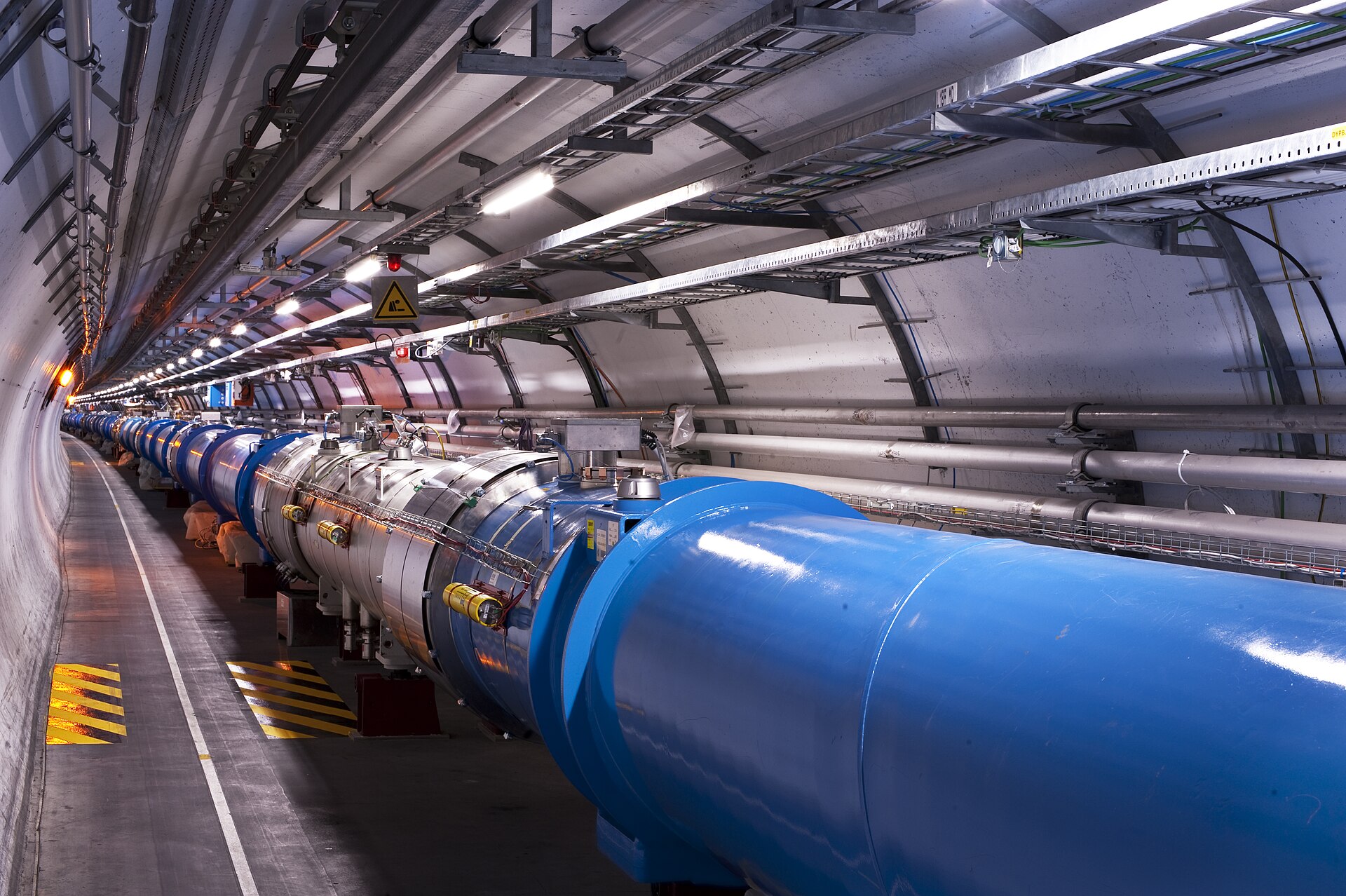
Most AI headlines this year have been about chatbots, coding agents and image generators. This week, one of the most talked-about AI stories came from a 27-kilometre ring of magnets under the French-Swiss border. The world’s biggest particle physics lab is teaming up with Europe’s best-known AI startup, and the plan is to apply the same idea behind large language models to the raw material of physics itself.
What CERN and Mistral announced
According to CERN’s official announcement, the two organisations signed a statement of intent to set up a long-term strategic partnership focused on “foundation models for scientific discovery.” The first focus is high-energy physics, but both sides say the work could later help other sciences.
The centrepiece is a single pretrained Large Physics Model. Reuters reported that the model is called Flare, and that a CERN spokesperson described it as using the same idea as the large language models behind generative AI, but trained on collision data rather than text.
A statement of intent, not a finished product
It is worth being precise about what was signed. A statement of intent sets out a shared goal. It is not a model release. As The Next Web and Reuters both noted, neither CERN nor Mistral disclosed a budget or a timeline.
What a “Large Physics Model” actually is
A foundation model is trained once on a huge dataset and then adapted to many different tasks. GPT-style chatbots are the best-known example: one model can write, summarise, translate and code.
Flare applies that recipe to particle physics. It will learn from billions of simulated proton-proton collisions at the LHC, the world’s largest and most powerful particle accelerator. CERN says the model is designed to support several tasks:
- Reconstructing collisions, turning raw detector signals into the particles physicists analyse.
- Identifying particles produced in each collision.
- Flagging unexpected signals that could point to new physics.
- Evaluating future detector designs before they are built.
Why one model instead of many
Today, CERN explains, reconstruction relies on a chain of specialised algorithms, each transforming detector signals a step further. Machine learning already improves many of those individual steps. The bet behind Flare is that a foundation model could learn across the whole chain at once and support multiple tasks inside a single system.
Why CERN needs this now
The short answer is data. CERN says it has stored around one exabyte of experimental LHC data so far. That is one million terabytes. And the volume is about to grow sharply.
The High-Luminosity LHC (HL-LHC) upgrade, expected to begin operating around 2030, will increase the number of collisions tenfold, according to CERN. More collisions mean more chances to spot rare events, but also far more data to reconstruct and sift through.
“High-energy physics provides a unique environment in which artificial intelligence can be developed and tested with exceptional rigour,” said Enrica Porcari, CERN’s Chief Information Officer, in the announcement. She added that the goal is AI capabilities “that can serve the whole physics community and be shared.”
What Mistral gets out of it
For Mistral, the Paris-based developer of open-weight AI models, the deal offers access to one of the world’s largest scientific datasets as it competes in frontier science, Reuters noted. Physics is also a demanding test: results can be checked against well-understood theory and precise measurements, which is harder to do with text or images.
“Together, we have the opportunity to push the frontiers of high-energy physics, developing AI capabilities that have the potential to lead to new scientific discoveries,” said Johannes Brandstetter, Mistral’s Vice-President of AI for Engineering.
A European AI story
Both organisations framed the partnership as a step for European science and technology. It lands in a busy month for AI in research, after OpenAI’s claims about new progress on the Riemann Hypothesis and Meta’s Muse Spark model coming to Mac Studios.
The open questions
Several important details are still unknown:
- Timing and cost: no budget or delivery date was announced.
- Simulation vs. reality: Flare will be trained on simulated collisions. How well it performs on real detector data has not yet been shown.
- Sharing: CERN says it wants capabilities that “can be shared” with the physics community, but how the model will be released has not been detailed.
Still, the direction is clear. Physics is becoming one of the proving grounds for AI, alongside projects like CHIME’s search for clues about dark energy. And as AI systems get more capable, questions about how they behave keep growing too, as we saw with AI models hacking real systems during safety tests.
Frequently asked questions
What is Flare?
Flare is the name of the planned Large Physics Model from CERN and Mistral. CERN describes it as the first foundation model for collider physics, trained on billions of simulated LHC proton-proton collisions.
Is Flare a chatbot?
No. It uses the same core idea as large language models, but it learns from collision data instead of text. Its jobs include reconstructing collisions, identifying particles and flagging unusual signals.
When will Flare be ready?
No timeline has been announced. CERN and Mistral have signed a statement of intent, and neither disclosed a budget or delivery date.
Why does CERN need AI for this?
CERN has about one exabyte of LHC data, and the High-Luminosity LHC, expected around 2030, will increase collisions tenfold. A single model that covers many analysis steps could help handle that scale.
Sources: CERN; Reuters via CNA; The Next Web.
Featured image: Views of the LHC tunnel, sector 3-4 by Maximilien Brice (CERN), CC BY-SA 3.0, via Wikimedia Commons.


