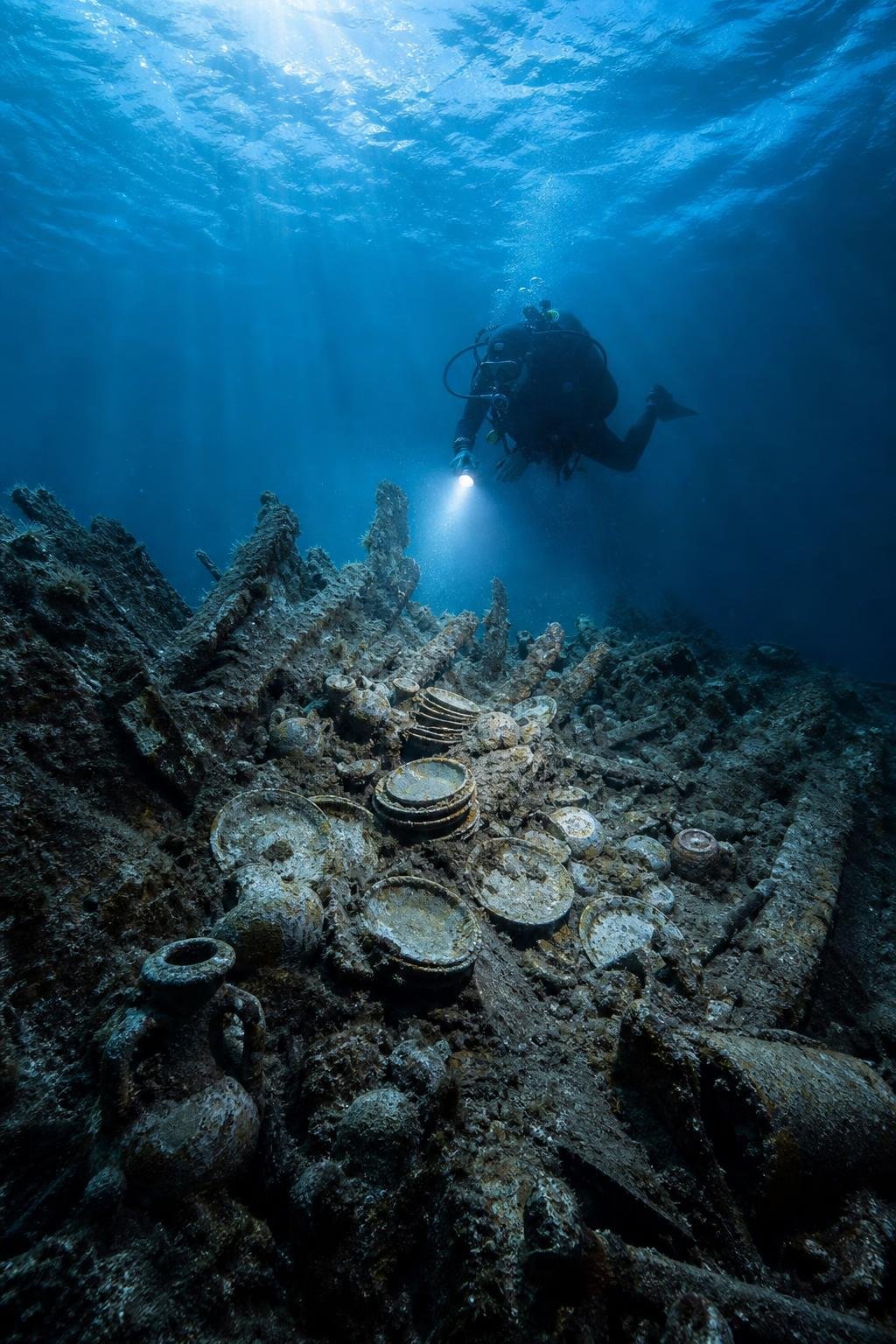
A cargo of elegant ceramic plates, bowls and serving trays has brought a long-lost Mediterranean trade route into focus. Recovered from an ancient shipwreck off Türkiye’s southern coast, the tableware appears to have been headed toward Rome at a time when merchants connected ports across the eastern and central Mediterranean.
The discovery offers more than a dramatic glimpse of an ancient shipwreck in Turkey. It also shows how specialized goods moved between production centers and wealthy markets around the middle of the 1st century BCE.
A Cargo Built for a Luxury Market
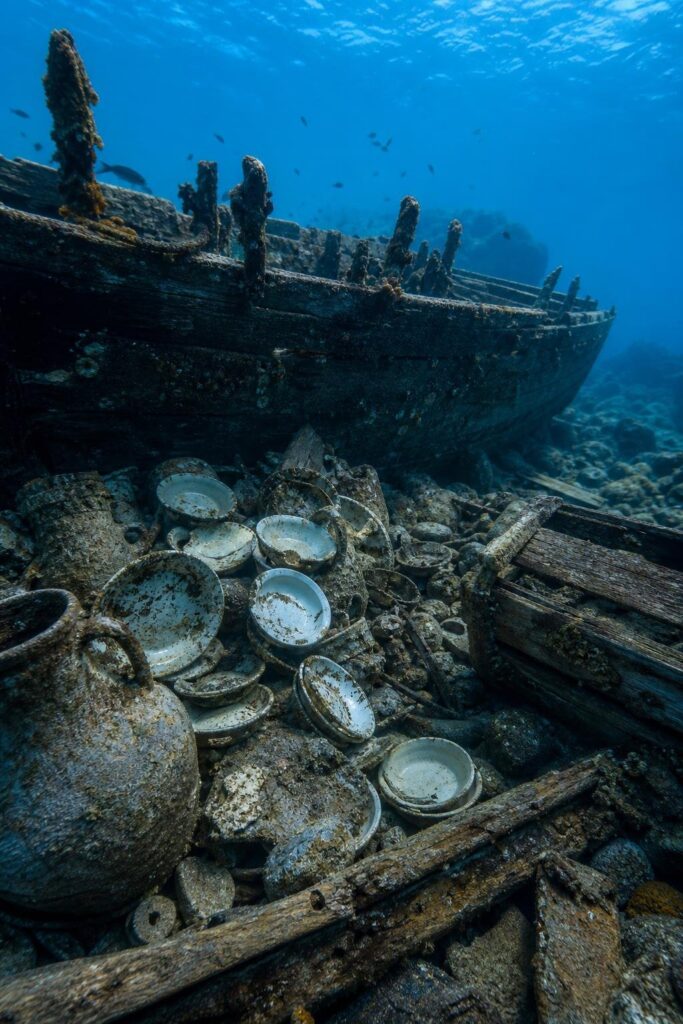
Türkiye’s Culture and Tourism Ministry said on Monday, Sept. 28, 2026, that archaeologists had recovered thousands of ceramic artifacts from the wreck off Adrasan, in Antalya province. The site rests on the Mediterranean seafloor at a depth of about 42 to 55 meters, or roughly 138 to 180 feet.
The excavation began in 2025. Researchers have identified 122 different forms and sizes among the recovered ceramics. The collection includes plates designed for nuts, soup bowls, fish plates and larger serving trays.
Together, these objects suggest a cargo intended for refined dining rather than basic storage or everyday transport. The pieces were part of a luxury tableware trade, and researchers believe they were being shipped to a market where such goods were especially desirable: Rome.
The ceramics were not necessarily all made in one workshop or even one region. The main cargo is believed to have come from ancient Rhosus, a city known today as Arsuz in Hatay province. Amphorae from Aegean islands were also found, indicating that the ship carried products from several production centers.
Evidence of a Mediterranean Trade Network
The wreck’s cargo points to a connected commercial world. Researchers believe the vessel operated within a network linking Antioch, the Aegean, Greece and the Italian coast.
Coins discovered at the site help establish when that network was active. The coins came from Antioch and date to the 1st century BCE. They support a timeline around the middle of that century, when the ship was likely sailing between eastern Mediterranean ports and the Roman market.
The finds also show how a single voyage could combine goods from different areas. Ceramics from Rhosus traveled alongside amphorae associated with Aegean islands, suggesting that merchants gathered cargo through a chain of regional exchanges before the ship set out for its final destination.
That pattern makes the wreck valuable to archaeologists. A preserved cargo can reveal commercial connections that are difficult to see from isolated objects found on land. Instead of representing one local industry, the ship’s contents reflect movement across a broad maritime system.
How the Ship May Have Been Lost
Researchers believe the ship left Rhosus bound for Rome. Its journey apparently ended off Adrasan after it struck shallows during a storm.
That explanation remains a reconstruction rather than a directly witnessed event. The wreck’s location and the circumstances inferred from its remains support the idea of a storm-related accident, but the exact sequence of events cannot be known with complete certainty after more than two millennia.
The ship’s position also helps explain why the excavation is technically demanding. Working at depths of up to 55 meters requires specialized underwater operations, and divers are assisted by underwater robots. These tools allow researchers to document the site and recover material in an environment where visibility, depth and time underwater can all complicate the work.
What the Tableware Reveals
The variety of plates, bowls and trays gives the wreck a more detailed story than a cargo made up of one repeated item. A shipment that included vessels for nuts, soup, fish and serving suggests a coordinated assortment of tableware.
It is still uncertain exactly how the goods were organized for sale or who would have purchased them in Rome. The evidence does, however, indicate that luxury ceramic wares were valuable enough to justify long-distance transport by sea.
The cargo also illustrates the risks built into ancient commerce. A merchant ship could carry products gathered from multiple regions, but one storm and a shallow-water impact could send the entire investment to the seabed. In this case, the accident preserved a snapshot of trade that would otherwise have been scattered, broken or lost.
Why This Ancient Shipwreck Matters
The Adrasan wreck connects several kinds of evidence: ceramic forms, amphorae, coins and the ship’s underwater setting. Each piece contributes to a larger picture of maritime trade around the middle of the 1st century BCE.
The discovery does not prove every detail of the voyage, and researchers’ conclusions about the ship’s route and sinking remain interpretations. Still, the combination of finds strongly supports the view that the vessel was part of a busy trade network carrying high-value tableware from the eastern Mediterranean toward Rome.
For modern observers, the wreck is a reminder that ancient globalization was powered by ships, specialized production and demand from distant consumers. Thousands of ceramics resting off Türkiye’s coast now provide a tangible record of that commerce.
Takeaway
The roughly 2,100-year-old wreck off Adrasan carried a varied cargo of luxury ceramic tableware, probably from ancient Rhosus and other Mediterranean production centers. Coins from Antioch place the voyage around the middle of the 1st century BCE, while the cargo and suspected route point to a commercial network stretching from the eastern Mediterranean to Rome. The ship likely sank after hitting shallows in a storm, preserving an unusually rich record of ancient trade.
Sources
– Anadolu Agency: 2,100-year-old luxury tableware unearthed from ancient shipwreck off Türkiye


